




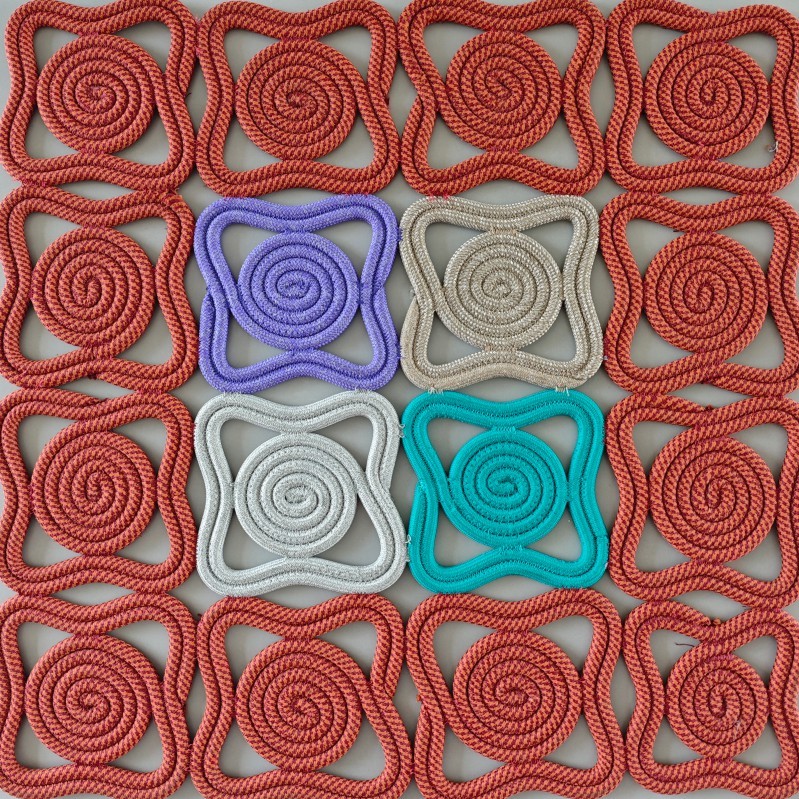

Poolside and Resort Furniture: Specifying Quick-Dry, Anti-Mildew Webbing for Hospitality Projects
Searches like best webbing for poolside furniture or quick dry webbing resort furniture supplier usually come from a project that has a deadline, a housekeeping manual and a guest experience to protect. Resort and hotel projects in Southeast Asia are the largest high-end order source in the region, and they buy differently from retail programmes: the decision weighs maintenance cost and supply stability over years, not the unit price on one purchase order.
This guide sets out what a poolside environment actually stresses, what quick-dry performance is built from, how to plan the maintenance cycle with the housekeeping team, what project-quantity supply demands, and the four questions worth asking a webbing supplier before signing a resort bid.
For poolside seating, drying time is both a comfort feature and a hygiene feature. Webbing that stays wet grows mildew within days at 30 degrees.
What a Resort Pool Deck Actually Stresses
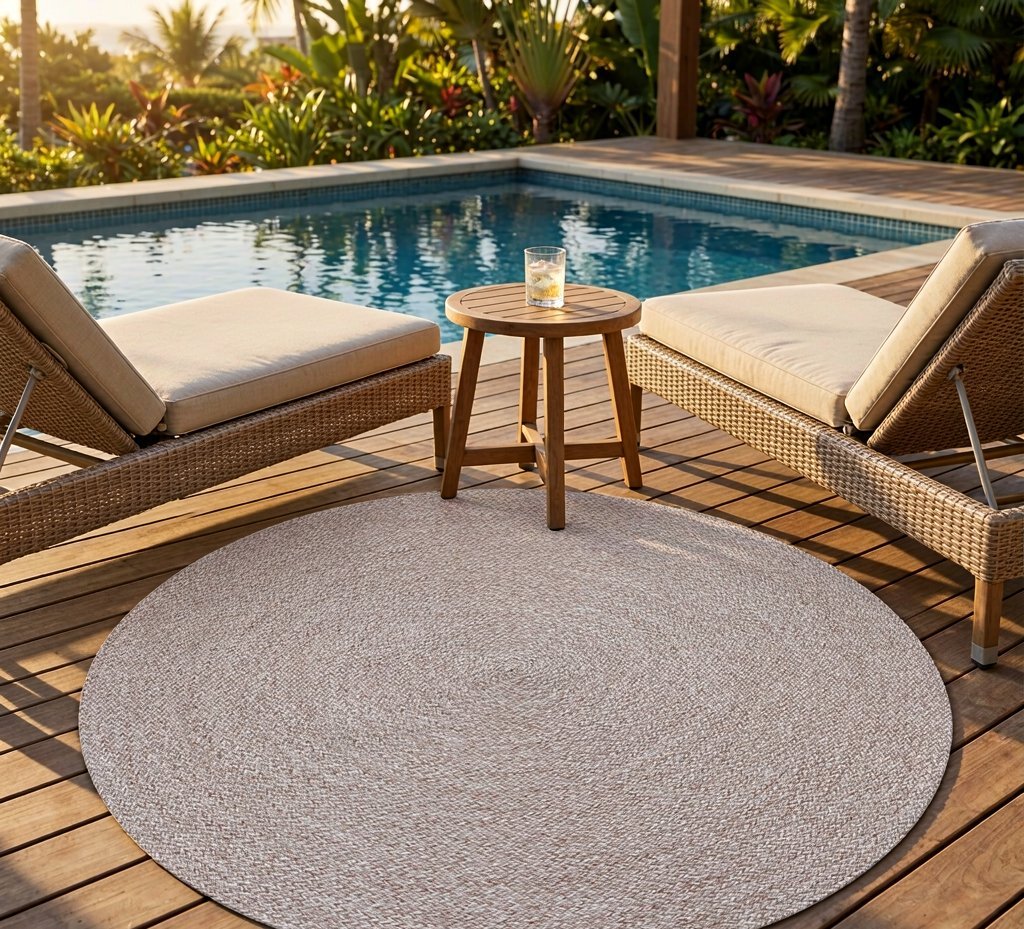
A poolside surface is not an outdoor surface with more sun. It is a different service environment with its own four stress factors, and each one changes what the webbing specification must survive:
| Stress factor | What happens on site | What goes wrong with the wrong webbing |
|---|---|---|
| Chlorinated water and splash-out | Pool water carries residual chlorine onto surfaces beside the deck; yarn and finish must tolerate repeated wetting with treated water, not just rain | Yarn that fades or turns brittle where splash lands, long before the shaded side of the same property shows it |
| Sunscreen and body oils | Guests transfer sunscreen onto woven surfaces every day in high season; oils sit in the rows and attract grit | Rows that darken and hold stains a hose cannot move, especially in the traffic lanes between pool and rooms |
| Coastal salt air | Resort sites in Bali, Phuket, Da Nang and Koh Samui sit within salt range; salt crystals hold moisture against the surface after spray dries | Accelerated wear at coastal properties compared with inland ones using the same product |
| Year-round, all-weather use | Hospitality surfaces get no off-season: daily wetting, daily sun, and cleaning on a housekeeping schedule rather than a maintenance schedule | Surface ageing that appears in year one instead of year three, and a replacement cost the project did not budget for |
The pattern across all four: none of them damage the surface on day one. They work through repeated cycles - wet, dry, wet, dry - which is why the property that chooses its webbing around a single lab number often ages faster than the one that chose it around cycle behaviour.
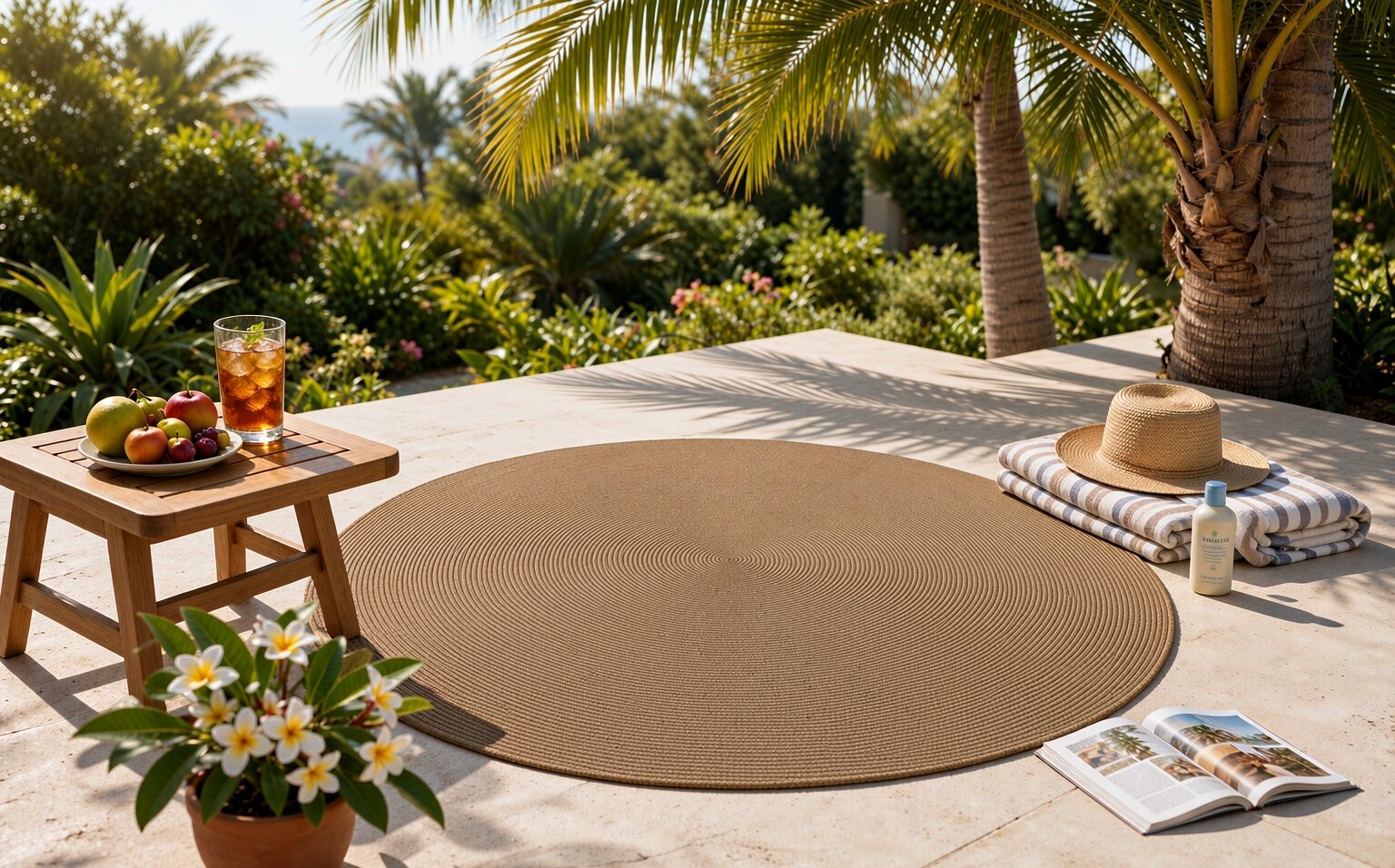
What Quick-Dry Actually Requires: Weave, Core and Yarn
Quick-dry is a system property, not a yarn property. Three layers of the construction each do part of the work, and a specification that only names one of them leaves the other two to chance:
| Layer | What it contributes | Failure mode when it is wrong |
|---|---|---|
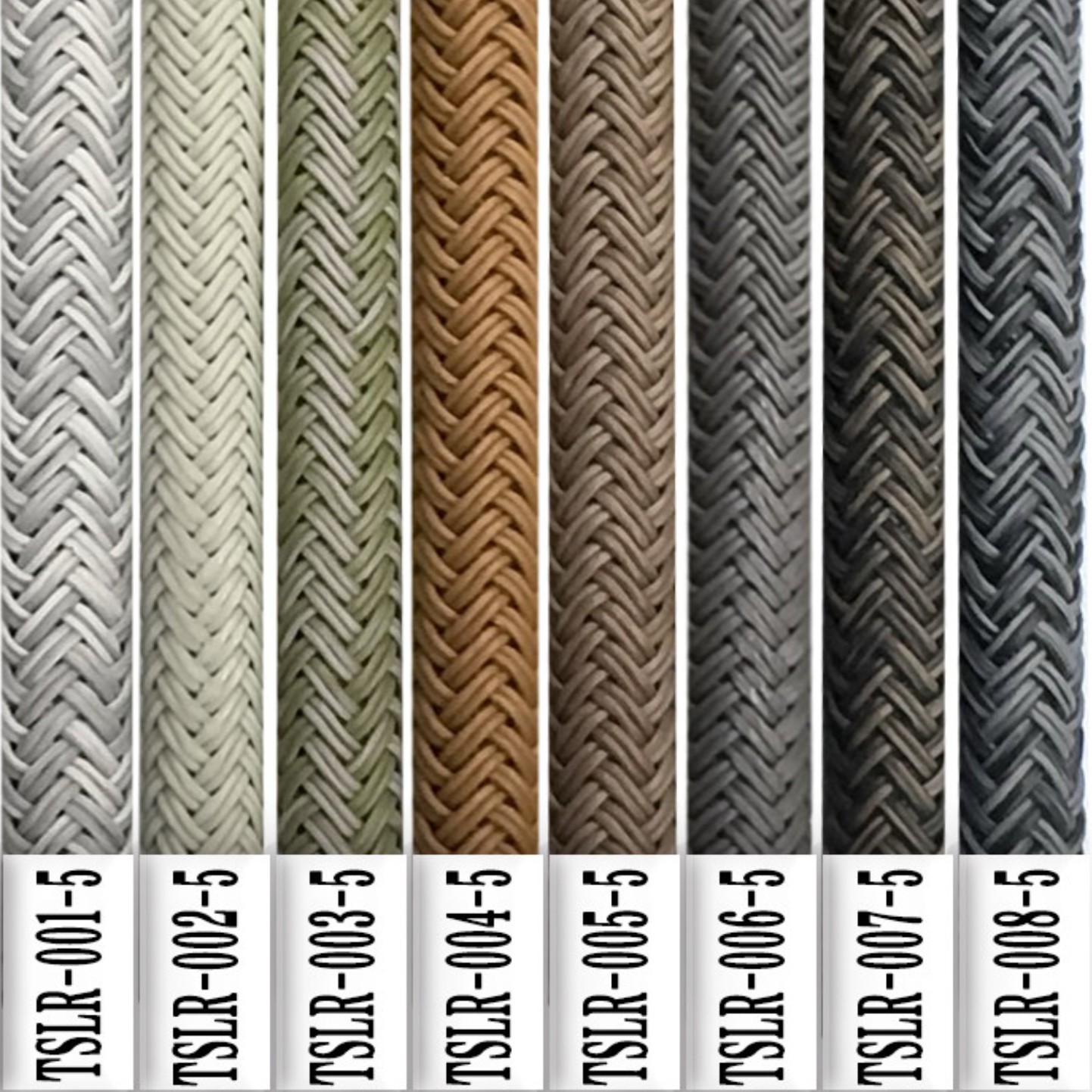
| Open weave structure | Row spacing and braid openness let water leave the surface and air move between rows; a tight, closed weave holds a film of water | Rows that stay damp through the afternoon and read as wet in guest photos |
| Core construction | A round cord keeps its shape because of what runs through its centre; the core supports the row profile so the surface keeps its open channels when wet | Cords that flatten when soaked, closing the gaps that make drying possible |
| Yarn type | Solution-dyed polyester and Textilene yarns carry colour in the fibre and release water readily; fibre choice decides how much the wetting cycle costs the surface | Yarns that absorb water into the fibre, lengthening dry-down on every cycle |
In practice the three layers are decided together: the weave sets how water leaves, the core keeps the channels open while it happens, and the yarn decides how much of the cycle the fibre itself absorbs. A sample soaked and dried three times shows the interaction far better than any single data line - which is why wet-cycle sampling is the evidence worth asking for at bid stage. For a deeper read on how core construction shapes surface behaviour, our comparison of cord core types covers it in detail.
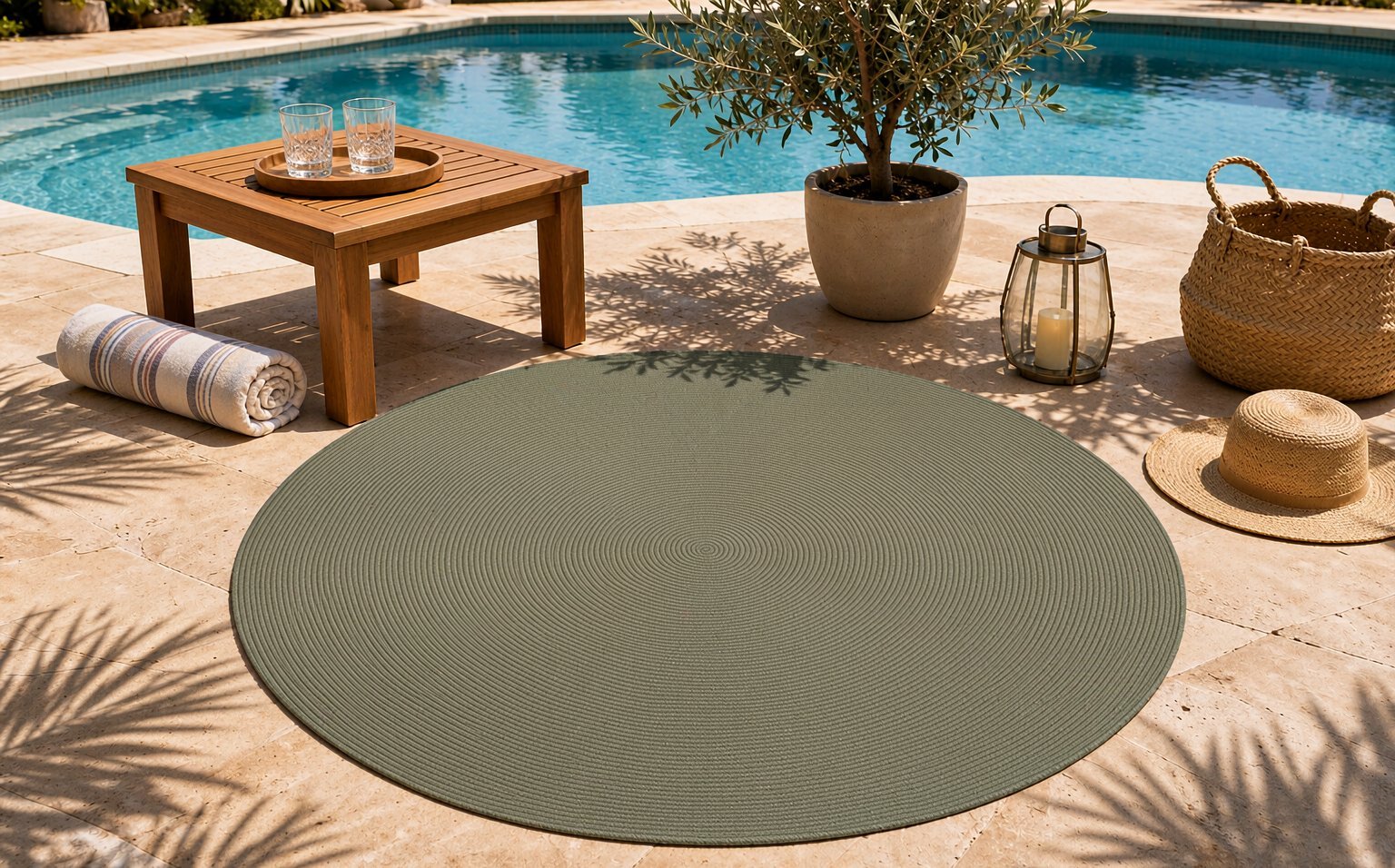
Planning the Maintenance Cycle With Housekeeping
Hospitality surfaces are cleaned by housekeeping teams on fixed schedules, not by maintenance engineers on condition. That reality changes what a good specification looks like: the webbing has to recover from the cleaning regime the property already runs. Three planning points worth settling before delivery:
Dry-down time in the schedule
Morning wash-down and afternoon guest use need a gap the surface can actually meet. A weave that air-dries between the two fits the housekeeping rhythm; one that stays damp through the afternoon forces the team to choose between a wet surface and a skipped cleaning.
Cleaning agents, confirmed in writing
Most properties standardise on a small set of chemicals. Confirm which agents the yarn and finish tolerate before the property fixes its manual, so the cleaning plan and the warranty reference the same reality.
Rotation and inspection rhythm
Traffic lanes between pool and rooms age first. A quarterly rotation and inspection routine costs the team minutes and turns localised wear into a planned panel swap instead of a guest complaint.
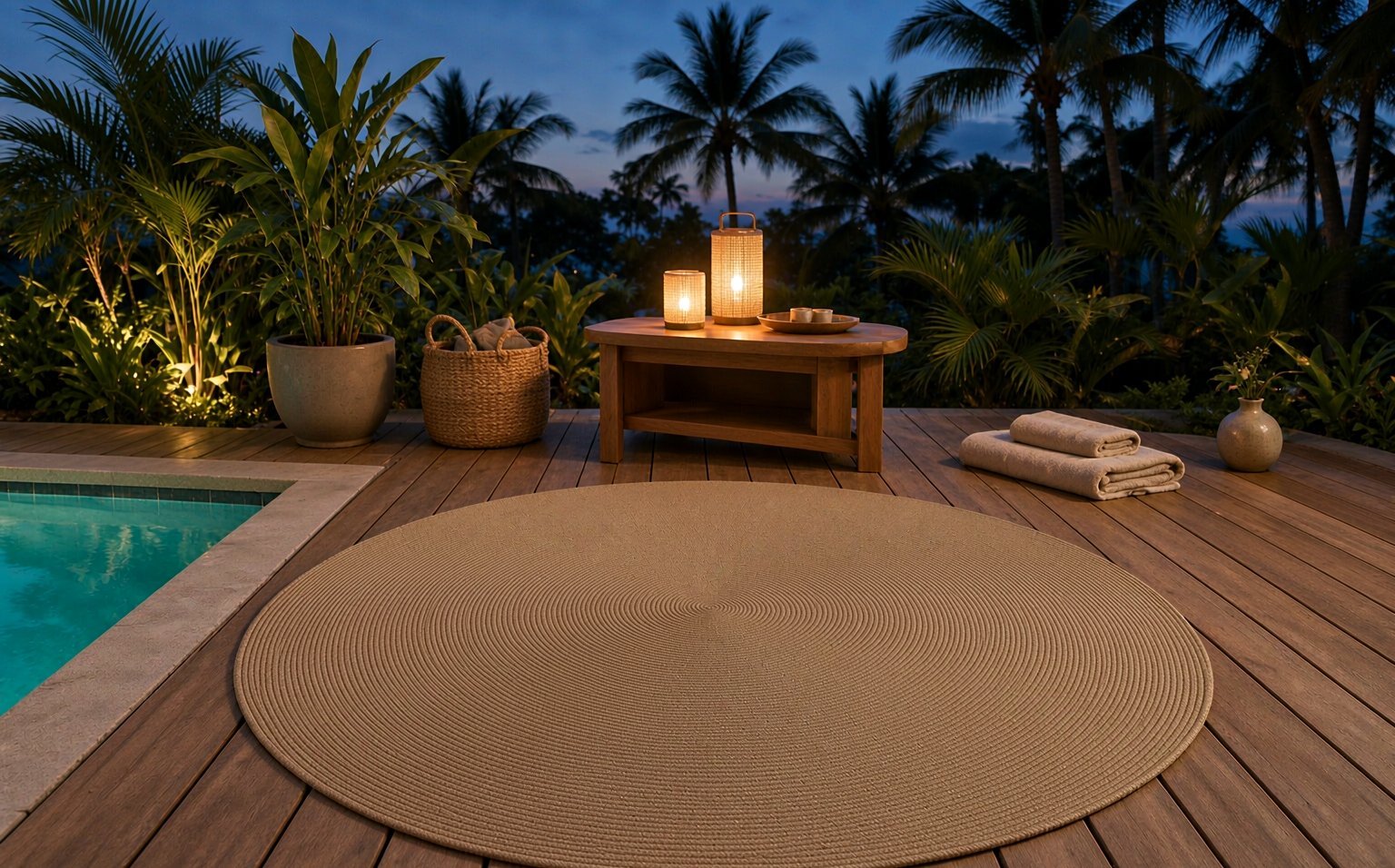
Supplying at Project Quantity: Colour-Lot Consistency and Replenishment Traceability
Resort projects order in hundreds of panels, often across two or three phases, and the hardest part is not the first delivery - it is the third. Phase-two panels must sit beside phase-one panels under the same afternoon sun, and storm-season replacements must match an installation the property made two years earlier.
That makes the supply conversation traceability-centred. Colour in solution-dyed yarn is fixed at the masterbatch lot, so consistency across a project means lot control: record the lot with the approved sample, hold the formulation against future orders, and confirm at bid stage that replacement quantities can be re-run to the same lot. This is the same lot discipline that governs custom colour programmes, applied on a project calendar rather than a production one.
What to Ask a Webbing Supplier Before Bidding a Resort Project
Bids are won or lost on answers that arrive before the contract, not after the first complaint. Four questions separate a project-ready supplier from a roll supplier:
Ask 1 - Lot traceability
Can the supplier name the masterbatch lot behind each delivered roll, and reproduce that lot for a replacement order two seasons later? Replacement panels that do not match the original read as a repair, and guests notice.
Ask 2 - Wet-cycle evidence
Ask what the yarn and core do after repeated wetting with treated pool water, and ask to see it in a sample that has been soaked and dried several times - not a fresh sample straight from the carton.
Ask 3 - Project-quantity planning
Resort orders run in hundreds of panels across phases. Confirm how the supplier stages production so phase two matches phase one, and what happens when a storm season pushes the schedule.
Ask 4 - Cleaning compatibility
Housekeeping teams clean on fixed schedules with set chemicals. Confirm which cleaning agents the yarn and finish tolerate, in writing, before the property writes its maintenance plan.
Material choice for tropical service is its own decision - acrylic, Textilene and solution-dyed polyester each trade cost against cycle behaviour differently, and our material comparison for tropical climates walks through that choice by project type.
How WebbingStyle Supports Resort Programmes
WebbingStyle manufactures rope webbing and Textilene series webbing for outdoor and poolside programmes, with solution-dyed polyester cords and a rubber-plastic core range across the series. For project buyers, the working model is straightforward: lot numbers recorded against approved samples, production staged across project phases, wet-cycle sampling offered at bid stage, and cleaning-agent compatibility confirmed before the maintenance manual is written.
For resort and hotel project teams, the practical starting point is a sample set plus a conversation about the project calendar - both are arranged directly through our sales team.
Where This Guide Stops
The stress factors, construction layers and planning points above are decision frameworks, not standard values: dry-down time, cleaning-agent tolerance and lot policy are confirmed against the actual yarn, core and weave through sampling, and against the chemicals the property actually uses. Test values for chlorine exposure, light fastness and similar properties belong in the supply agreement with the supplier's own data - this guide deliberately leaves them out. What it does commit to is the order of operations: sample for wet-cycle behaviour, agree the lot policy before phase one, and write the housekeeping plan around what the surface can actually do.
About WebbingStyle
WebbingStyle is a furniture rope webbing manufacturer with over 20 years of industry experience, operating a 12,000 m2 garden-style factory with 70+ production machines and supplying partners in more than 40 countries. The company offers OEM/ODM customisation across acrylic, Textilene, solution-dyed polyester and rubber-plastic core webbing series.
Contact us for samples and a quote
First published: November 2026. Technical guide reviewed annually.