




Rubber-Plastic Core vs Spandex-Core Rope Webbing: Rebound, Comfort and Cost Compared
Searches like rubber core webbing vs elastic core webbing or furniture webbing rebound and sag comparison usually arrive at a moment of doubt: two quotes, two cords that look identical from the outside, and no way to tell which one will still feel right after a season of daily use. The answer is inside the cord. Two ropes can carry the same solution-dyed braid and read as the same product on a spec sheet, yet behave very differently under compression because the cores are different.
This guide separates the two core families, compares them side by side, gives a simple 72-hour compression test you can run in a sample room, and explains where mixing cores across one product line makes sense.
Core construction, not yarn count, decides how woven rope webbing feels after six months of use. Test rebound after 72-hour compression, not straight out of the box.
What the Core Does to the Feel of the Webbing
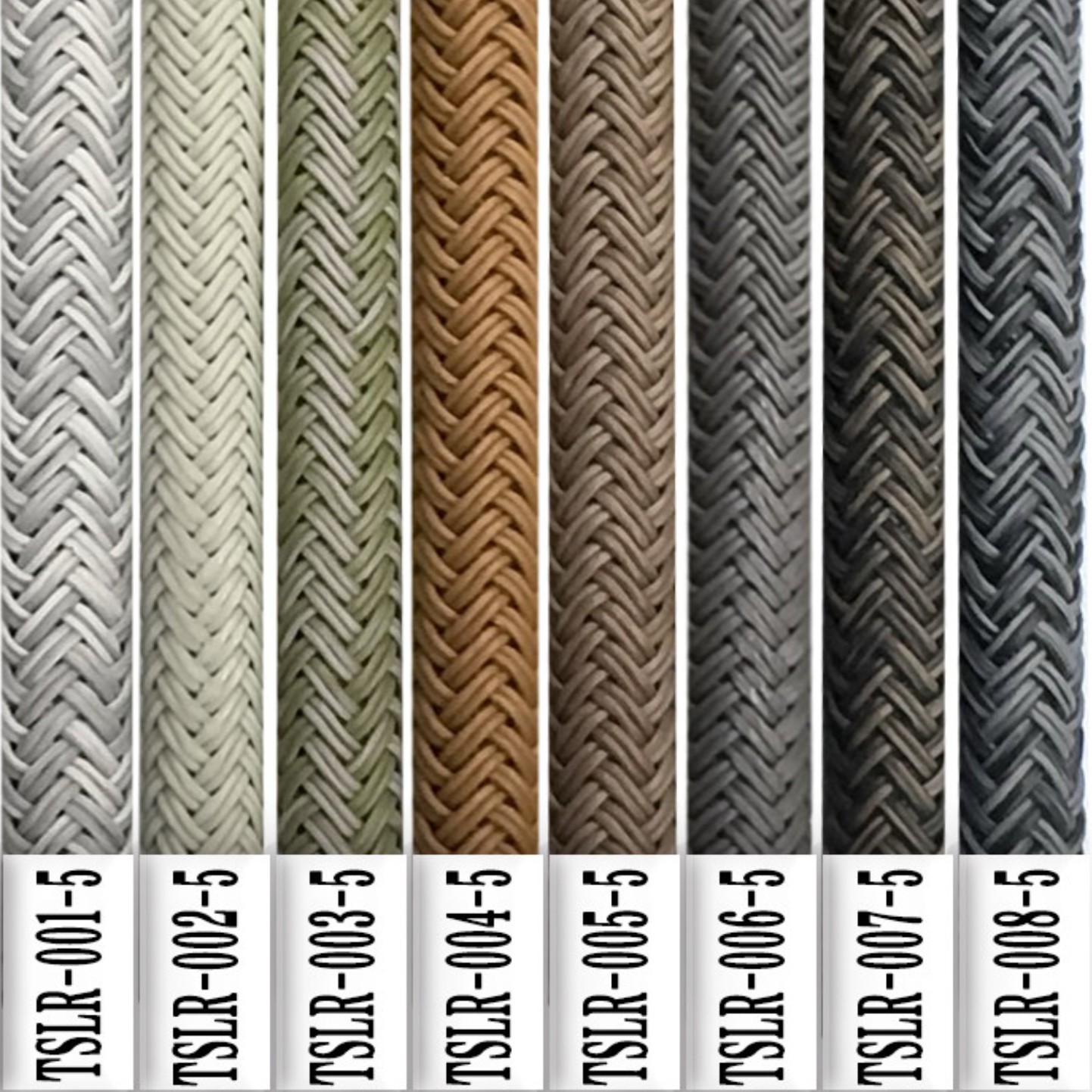
A braided rope cord is two products in one: a solution-dyed textile shell and a core that fills its centre. The shell carries the colour, the texture and the abrasion surface. The core carries the mechanics - how the cord compresses under load, how it recovers, and how much permanent flattening it accumulates over a season of daily use.
Rebound, sag and fatigue are the three properties buyers actually notice. Rebound is how quickly the row returns to its round profile after being pressed. Sag is the visible flattening that appears in the zones that get used most. Fatigue is the slow loss of all of it - the point where the surface still looks right but no longer feels right. All three are decided by the core, which is why a yarn count on a quote sheet says very little about how the webbing will age.
Rubber-Plastic Core vs Spandex-Polyester Core: The Comparison
The two core families dominate furniture webbing programmes, and they optimise for different outcomes. Neither is better in absolute terms; each is better at a different job.
| Property | Rubber-plastic core | Spandex-polyester core |
|---|---|---|
| Initial hand feel | Firmer under the palm; the row reads round and structured | Softer and more elastic on first touch |
| Rebound after months of use | Holds its profile well through repeated compression cycles | Comfortable at first, but gradual loss of elasticity shows earlier under heavy use |
| Sag resistance | Higher; the row resists flattening in high-load zones | Moderate; flattening appears first where use is heaviest |
| Stretch behaviour | Minimal stretch; the weave keeps its pitch | Noticeable stretch, which suits wrapping details and curved frames |
| Weight | Heavier cord for the same diameter | Lighter cord for the same diameter |
| Cost band | Higher, driven by the core compound | Lower, driven by commodity elastic yarn |
| Best fit | Hospitality and all-day-use programmes where the surface works for hours every day | Residential and decorative programmes where initial softness matters most |
Practical values - recovery percentages, cycles to fatigue, elasticity limits - vary by compound grade and cord diameter, so treat the table as a ranking of behaviour, not a datasheet. Ask each supplier for compression-recovery data on the actual lot you would buy, and compare like for like.
How to Test Rebound at the Sample Stage: The 72-Hour Method
You do not need a laboratory to separate a good core from a mediocre one. A four-step routine in a sample room exposes most of what matters:
Step 1 - Compress
Lay a short cord segment on a flat surface and press it under a flat weight that roughly matches the compression the installed webbing would carry. Leave it under load for 72 hours at room temperature.
Step 2 - Release and rest
Remove the load and let the sample rest for 24 hours. Do not measure immediately: an immediate reading rewards the softer core for the wrong reason.
Step 3 - Measure recovery
Measure the cord height against its original diameter. High recovery with no visible flat spot points to a core that will keep the row round through the season; a permanent set means the programme needs a firmer core or a denser braid.
Step 4 - Repeat across cores
Run the same routine on both core options side by side. The comparison at the sample stage is what the buyer feels, or regrets, at month six.
The 72-hour figure is a practical screen, not a certification. Formal test reports with defined loads, cycles and acceptance limits belong in the supply agreement, and should be requested from the supplier before the contract is signed - a point our checklist on qualifying a webbing supplier covers in detail.
Mixing Cores Across One Product Line
Product lines do not have to choose one core for everything. Mixing cores by zone keeps the visible comfort where it matters and the structural firmness where the load is:
| Zone | Core to specify | Reason |
|---|---|---|
| High-load zones | Firmer rubber-plastic core | Flattening starts where compression is greatest |
| Comfort-led zones | Softer spandex-polyester core | Initial softness is the visible comfort cue |
| Colour consistency | Same solution-dyed shell on both | The masterbatch shell stays identical, so mixed cores do not split the colour programme |
The trick that makes mixing workable is the shell: because both cords carry the same solution-dyed braid, the colour programme stays unified even when the mechanics differ from zone to zone. Buyers who need the widest immediate colour range can start from the standard solution-dyed polyester rope webbing range, then move to a custom masterbatch lot once volumes justify it.
How WebbingStyle Builds Around Cores
WebbingStyle produces rope webbing with the core treated as a specification variable, not an afterthought: the standard outdoor cord programme is built on a firm polymer core that keeps spiral rows round through seasons of outdoor use, and alternative core constructions are developed to order through the OEM/ODM route, matched to the environment the furniture will stand in and the feel the programme is aiming for. Because all cords carry the same solution-dyed shell, core choices can be tuned without splitting the colour programme.
If your next step is a custom programme with a defined core and colour, our guide on preparing an OEM/ODM webbing request walks through the information checklist and the three sampling gates that turn a specification into a shippable lot.
Where This Guide Stops
Compound grades, recovery percentages and cost ratios differ by cord diameter and construction, so this guide ranks behaviour instead of publishing numbers that would only be true for one lot. Which core fits a given programme is confirmed against the actual environment and usage pattern through sampling; series availability and order quantities are confirmed by our sales team case by case. What the guide does promise is the decision rule: judge the core, not the yarn count, and judge it after compression, not out of the box.
About WebbingStyle
WebbingStyle is a furniture rope webbing manufacturer with over 20 years of industry experience, operating a 12,000 m2 garden-style factory with 70+ production machines and supplying partners in more than 40 countries. The company offers OEM/ODM customisation across acrylic, Textilene, solution-dyed polyester and rubber-plastic core webbing series.
Contact us for samples and a quote
First published: November 2026. Technical guide reviewed annually.