



Webbing Test Reports to Ask for Before You Sign a Supply Agreement
Searches like furniture webbing UV test report, colour fastness test for furniture webbing or what tests should furniture webbing pass come from buyers at one specific moment: just before a supply agreement is signed, when a performance claim on a quote sheet has to become something defensible. This guide answers that moment - which five tests matter, how to read the reports, and what to write into the agreement so the document in your hand refers to the goods in your container.
The point is not to collect more certificates. It is to make sure the report, the sample and the shipment are the same thing - and to know which question each test actually answers.
A type test proves the material can pass; a lot test proves this shipment passed. Supply agreements should ask for lot-level reports, not certificates on the wall.
The Five Tests That Matter
For furniture webbing, five test families cover the claims that matter in service. This guide deliberately names no standard numbers and no pass thresholds - those belong to the specific material, the destination market and the agreed specification, and a number quoted without its conditions is worse than no number.
| Test | What it actually answers | What a weak report looks like |
|---|---|---|
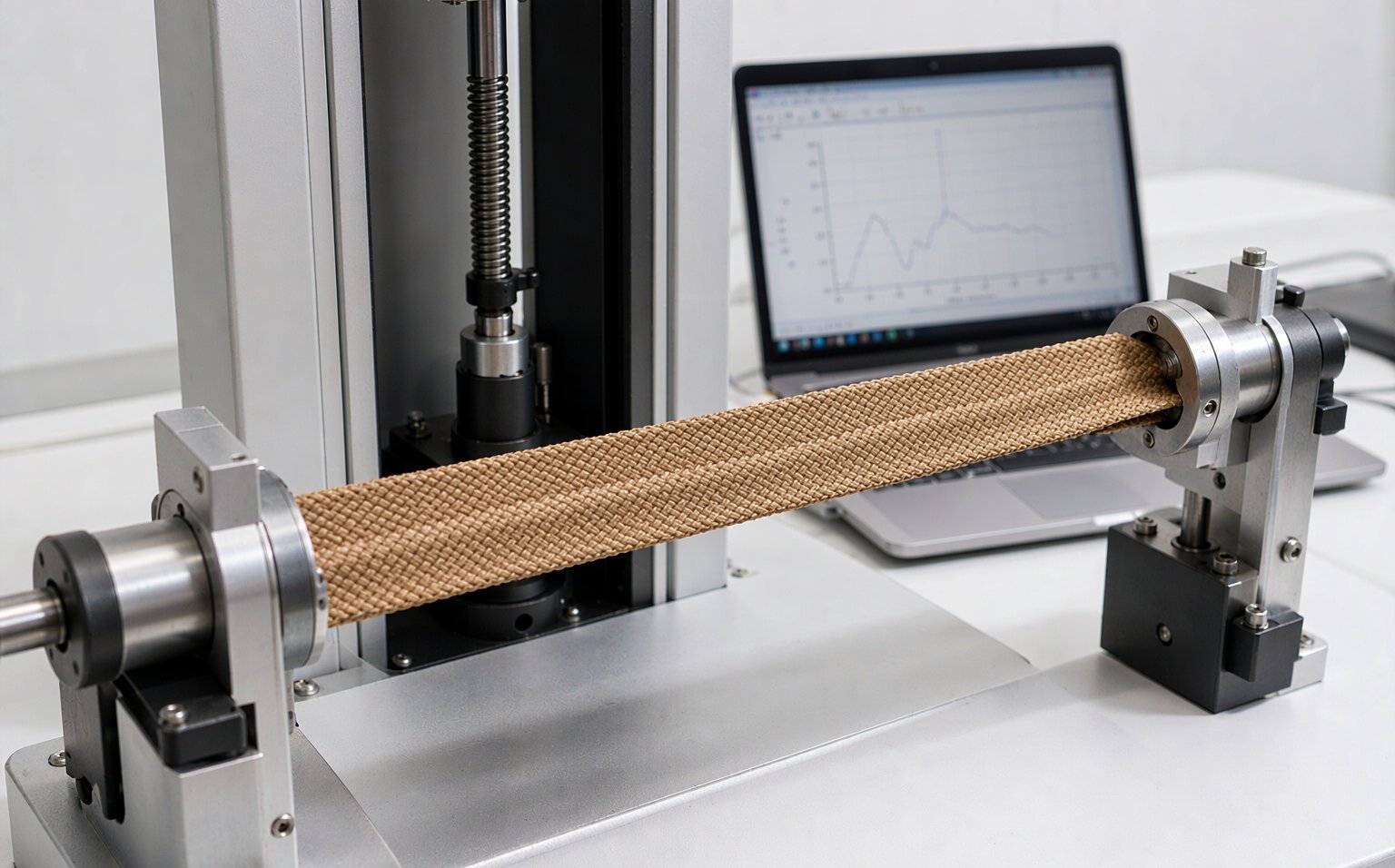
| Tensile strength and elongation | How much load the webbing carries before failure, and how far it stretches under load | A quoted strength with no sample width, gauge length or conditioning noted is not comparable between suppliers |
| Weathering / UV resistance | How the material holds colour and integrity after accelerated exposure, reported against a defined exposure schedule | A pass result with no exposure duration or intensity - the number means very little without the conditions |
| Light fastness (colour to light) | How much the colour shifts under controlled light exposure, rated on a recognised grey or blue scale | A single colour rating quoted with no scale or exposure basis, which cannot be repeated or challenged |
| Rub fastness (colour to friction) | How much colour transfers when the surface is rubbed, dry and wet | Skipping the wet rub result on a product that will live poolside and be cleaned regularly |
| Mildew and antimicrobial resistance | Whether the yarn and finish resist fungal growth under warm, humid conditions | A claim tested only in a dry lab, when the real service environment is a shaded tropical terrace |
Which of the five takes priority depends on the project. A shade structure under a tropical roof will live with mildew pressure; an open-sun poolside programme will live with UV and chlorine; a high-traffic hospitality surface will live with rub fastness. Our comparison of webbing materials for tropical climates sets out how the material choice changes that priority list.
How to Read a Report: Conditions Matter More Than the Number
A test result is a result under a set of conditions. Before you compare two numbers, compare the conditions behind them - the sample conditioning, the exposed area, the duration, the temperature and humidity, the scale used for a rating, and whether the sample was tested dry or wet. Two suppliers can quote apparently different results for the same material simply because one tested a dry sample and the other a conditioned one.
Then check three things on every report: the sample description matches the product you are buying, the date is current enough to represent the current production, and the conclusion is signed by a named issuer. A report that only shows a pass mark, with no method or sample identity, is a marketing sheet rather than evidence.
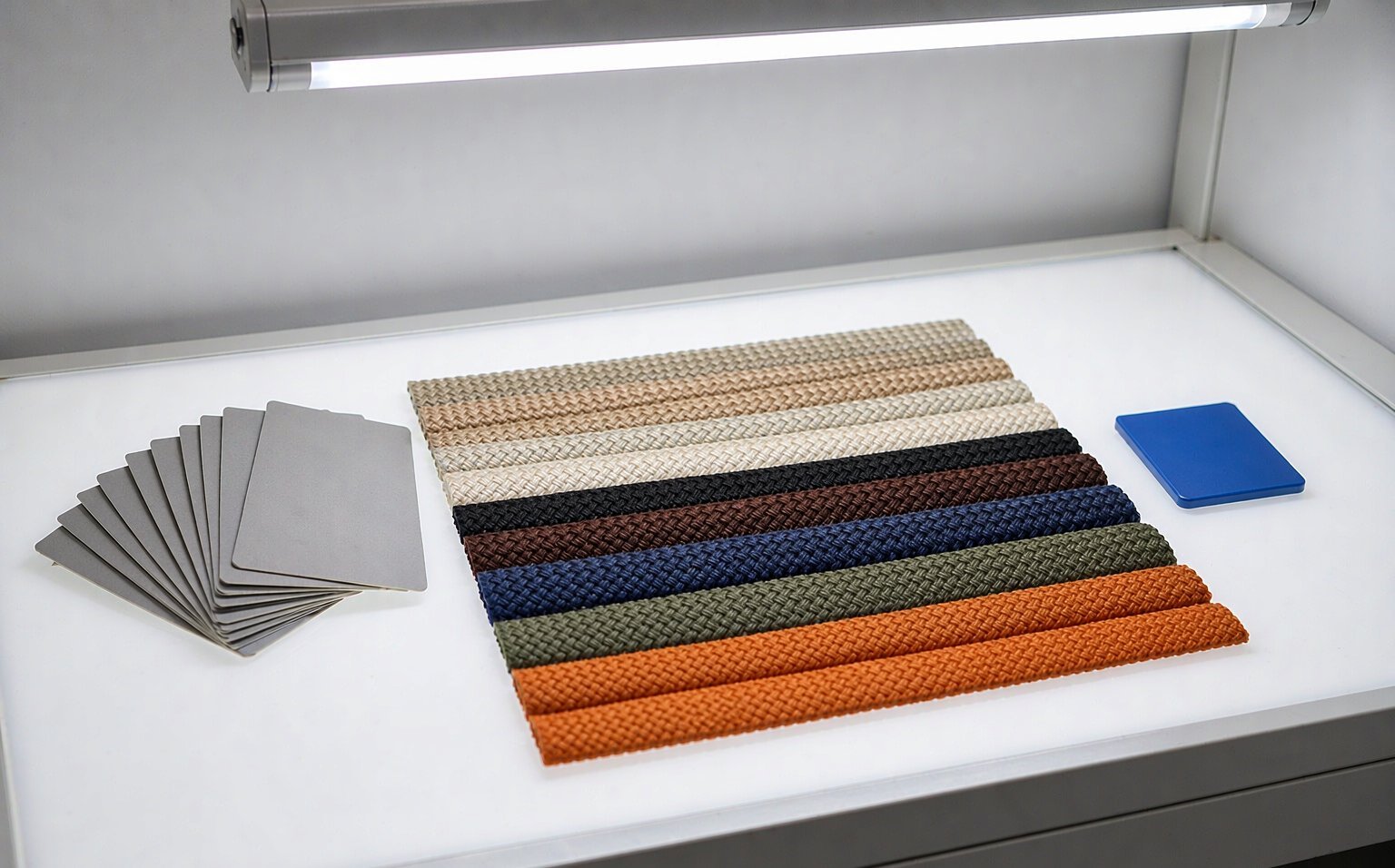
Type Test vs Lot Test: The Certificate on the Wall Is Not Your Shipment
A type test is performed once on a representative material, often early in a product's life. It answers a design question: can this construction meet a requirement at all? A lot test is performed on a specific production batch. It answers a commercial question: did the goods now in your container meet the requirement?
Both are useful, and they are not interchangeable. For a supply agreement, the lot-level report is the one that protects you, because it is tied to the goods you paid for. Ask the supplier to state plainly which type of report they are offering, and ask for a lot report from the shipment itself at delivery - not a copy of the original type test kept on the factory wall.
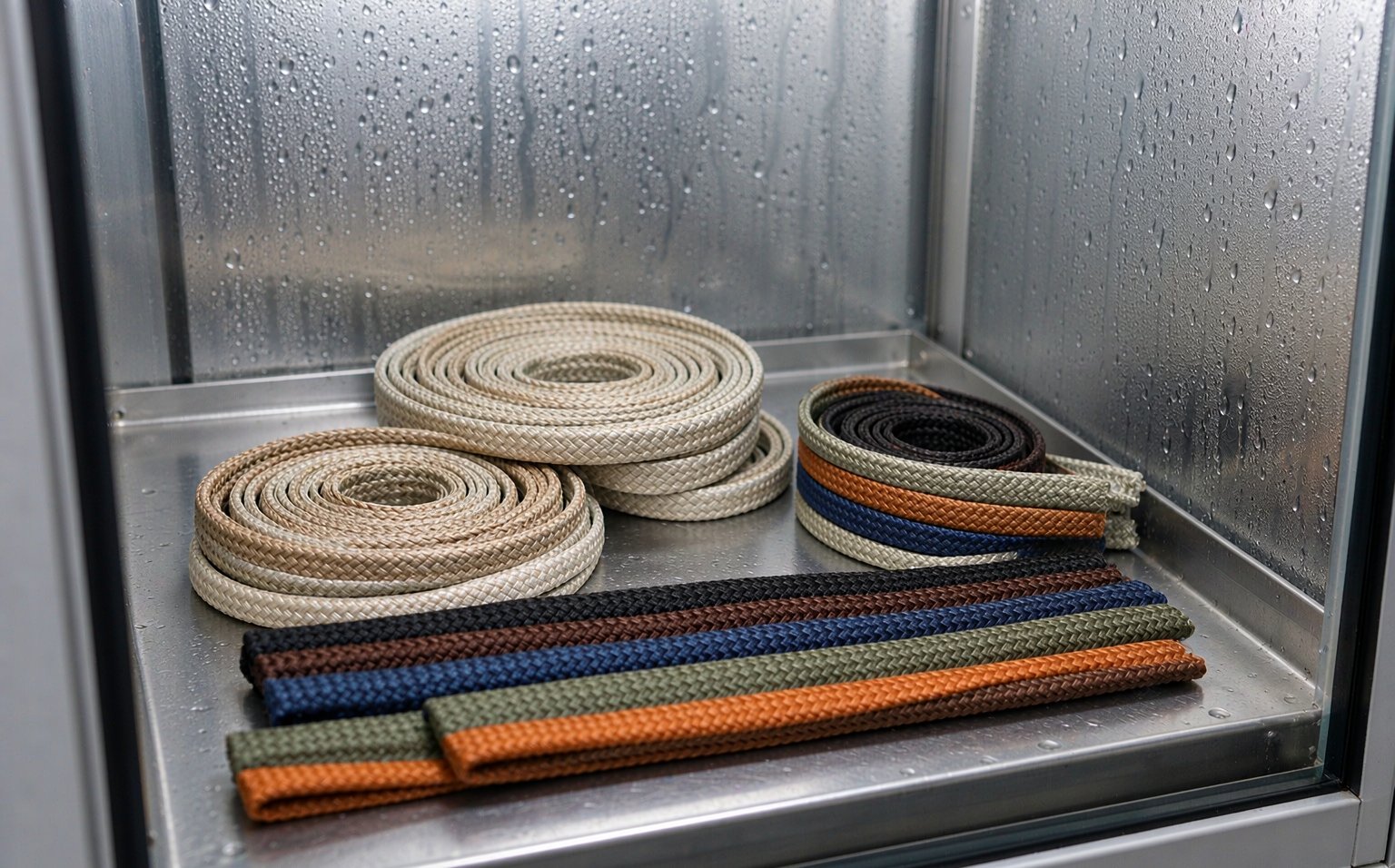
Third-Party vs In-House Laboratory: How to Combine Them
An independent laboratory gives you a neutral baseline that a buyer can verify; an in-house laboratory gives you frequency - the ability to test every lot rather than a few selected ones. A credible quality system uses both: independent reports to establish that the material and the method are sound, and in-house lot testing to keep every delivery inside the agreed envelope.
When you receive a third-party report, check the scope of the laboratory's accreditation covers the specific test, not just the material category. When you receive an in-house report, ask for the calibration and sampling routine behind it. Neither is automatically better; the question is whether the report can be traced to the lot and repeated on demand.
What Clauses to Write Into the Supply Agreement
Reports only protect a buyer when the agreement turns them into obligations. Five clauses do most of the work:
| Clause | What to specify |
|---|---|
| Report type | State whether the report is a type test on the material or a lot test on the delivered shipment |
| Sample identity | Require the report to reference the exact yarn, colour and construction supplied, not a generic product family |
| Issuing body | Name who issued the report - independent laboratory, in-house lab, or both - and ask for the scope of accreditation |
| Retest right | Reserve the right to retest a delivery against the approved sample, with an agreed route for resolving a dispute |
| Retained sample | Keep a labelled counter-sample from each approved lot so a future claim can be tested against the original |
None of these clauses requires a supplier to publish a secret formula. They require the supplier to connect an ordinary commercial document - a test report - to the ordinary commercial object - a shipment. If a supplier resists that connection, the resistance is itself useful information. Our guide to qualifying a webbing supplier covers the wider factory-level checks that sit alongside these document checks.

How WebbingStyle Handles the Document Side
WebbingStyle works from the specification outward: reports are issued against the actual yarn, colour and construction supplied, and lot records are kept so a delivered roll can be traced back to its production batch. Buyers can request the report types relevant to their project, combine independent baseline reports with lot-level in-house checks, and retain a labelled counter-sample with the approved lot.
For procurement and quality teams, the practical starting point is a sample plus the report list for the intended application - both are arranged directly through our sales team.
Where This Guide Stops
This guide is a set of questions, not a set of pass values. Standard numbers, thresholds and acceptance limits must come from the specification agreed for the material, the market and the application, and are confirmed through sampling and agreed test methods. What it does commit to is the order of operations: identify the five tests that matter to your project, read the conditions before the number, demand lot-level evidence for the shipment, and write the evidence into the agreement before it is signed.
About WebbingStyle
WebbingStyle is a furniture rope webbing manufacturer with over 20 years of industry experience, operating a 12,000 m2 garden-style factory with 70+ production machines and supplying partners in more than 40 countries. The company offers OEM/ODM customisation across acrylic, Textilene, solution-dyed polyester and rubber-plastic core webbing series.
Contact us for samples and a quote
First published: November 2026. Technical guide reviewed annually.