




Specifying Woven Rope Seating: Webbing Specs Designers Should Put on Drawings
Searches like how to specify rope webbing for furniture design or woven webbing tension and pitch specification usually come from a designer holding a drawing that is almost finished - and a material that is not on it yet. The woven surface will be judged by customers within weeks of installation, but the decisions that decide how it ages were made, or skipped, at the drawing stage.
This guide lists the four parameters worth putting on the drawing, the frame-interface details that prevent rework, how to choose between round cord and flat webbing, and the sample-room routine that keeps the approved sample and the delivered lot the same thing.
Most woven seating failures are frame problems, not webbing problems: sharp rail edges and wrong fixing pitch cut webbing life faster than sunlight does.
Why the Specification Belongs on the Drawing, Not in an Email
Webbing arrives at the furniture factory as a roll, but it behaves as a system: cord, frame, fixing and tension all act on each other. When the parameters live in an email thread, three things happen. The workshop weaves to what it can infer. The supplier quotes to a different assumption. And when the surface does not read as intended, nobody can say which decision failed, because no single document held the decisions.
Putting the specification on the drawing changes the conversation with the supplier as well. A quote against a drawn specification is a like-for-like commitment; a quote against a photo of a similar surface is an interpretation. The four parameters below are the minimum set that makes the drawing self-sufficient.
The Four Parameters: Diameter, Pitch, Tension, Sag
None of these values can be published as universal numbers - they depend on the frame, the cord construction and the application. What belongs on the drawing is the parameter itself and its decided value, so that sampling and bulk are checked against a decision rather than a preference.
| Parameter | What to decide | What goes wrong when it is missing |
|---|---|---|
| Cord diameter / strap width | Matched to the frame rail profile and the visual density the design calls for; round cords and flat straps are dimensioned differently | Rows packed too tight or too sparse against the rail, or a cord that cannot follow the frame radius without buckling |
| Row pitch | Centre-to-centre spacing of the rows, set so the pattern reads evenly across the panel, including at the corners | Uneven gaps and wavy lines that appear only once the surface is stretched and installed |
| Tension | How firmly each row is set: firm enough to hold the pattern, relaxed enough not to bow the frame | A surface that slacks after the first season, or a frame pulled visibly out of square |
| Allowable sag | The deflection the design tolerates at mid-span once the surface has settled into use | A panel that reads as loose within weeks, and a complaint that reaches the supplier instead of the drawing |
A practical habit: draw the pitch grid on the panel view of the drawing itself, including the corner transitions. Pitch that looks even in a table of numbers often reads uneven across a real panel, and the corners are where the eye catches it first.
Frame Interface Details That Prevent Rework
Most warranty conversations about woven surfaces start at the frame, not the cord. The webbing is the last element installed and the first one blamed; the four interface details below decide how the surface actually wears.
| Interface detail | What to specify | Failure mode when skipped |
|---|---|---|
| Rail edge radius or chamfer | Specify a radiused or chamfered rail edge the cord can bed into; a braid pulled over a sharp edge works against itself at every row | Abrasion concentrated at the rail line, the first place a surface starts to look tired |
| Fixing pitch | State the fixing point spacing on the drawing so the frame and the weaving jig are drilled to the same grid | Fixings landing between rows, forcing rework at assembly |
| Retention detail | Define groove depth or retention method so the first and last rows are held the same way as the middle ones | End rows that loosen first, an unevenness that reads as a quality problem |
| Corner treatment | Decide how rows turn the corner: woven through, wrapped, or terminated against a feature detail | Corners where the pattern breaks down and the eye goes straight to it |
These details cost nothing at the drawing stage and are the most expensive to change after production has started. A supplier reviewing drawings before sampling will flag them - it is worth asking for that review explicitly rather than discovering the interfaces at assembly.

Aesthetic Choices: Round Cord vs Flat Webbing, and Where Colour Really Comes From
The visual language of a woven surface is set by two choices: the cross-section of the material and the way colour is specified.
| Choice | Visual character | Where it fits |
|---|---|---|
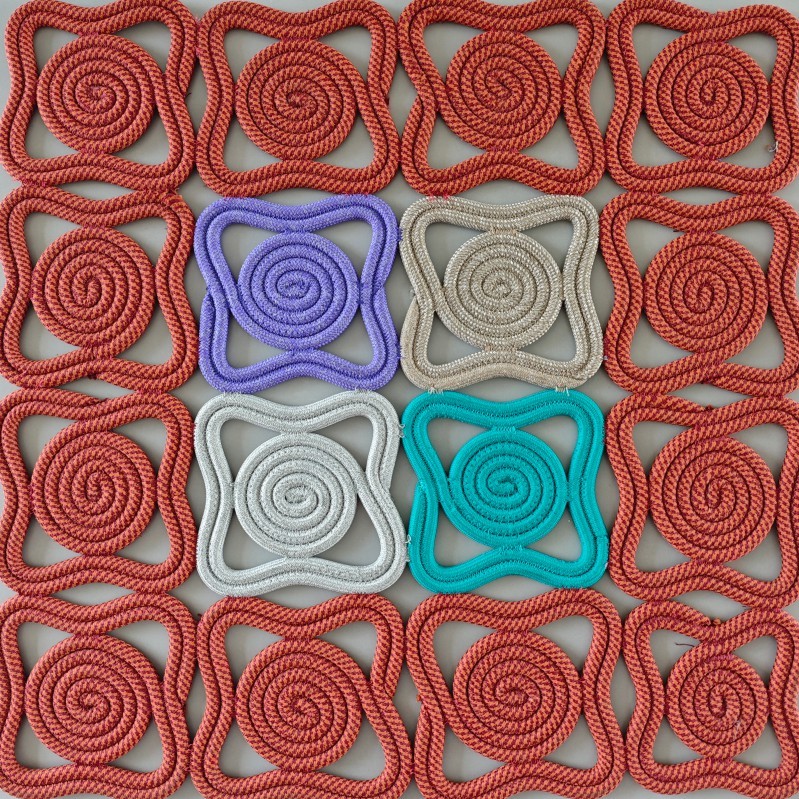
| Round cord | Reads as a rounded, tactile row with visible shadow lines between rows; the classic rope-woven look | Suits spiral and patterned layouts where each row should read individually |
| Flat webbing | Reads as a flatter, more continuous band with a wider visual plane | Suits broad coverage and cleaner, more architectural surfaces |
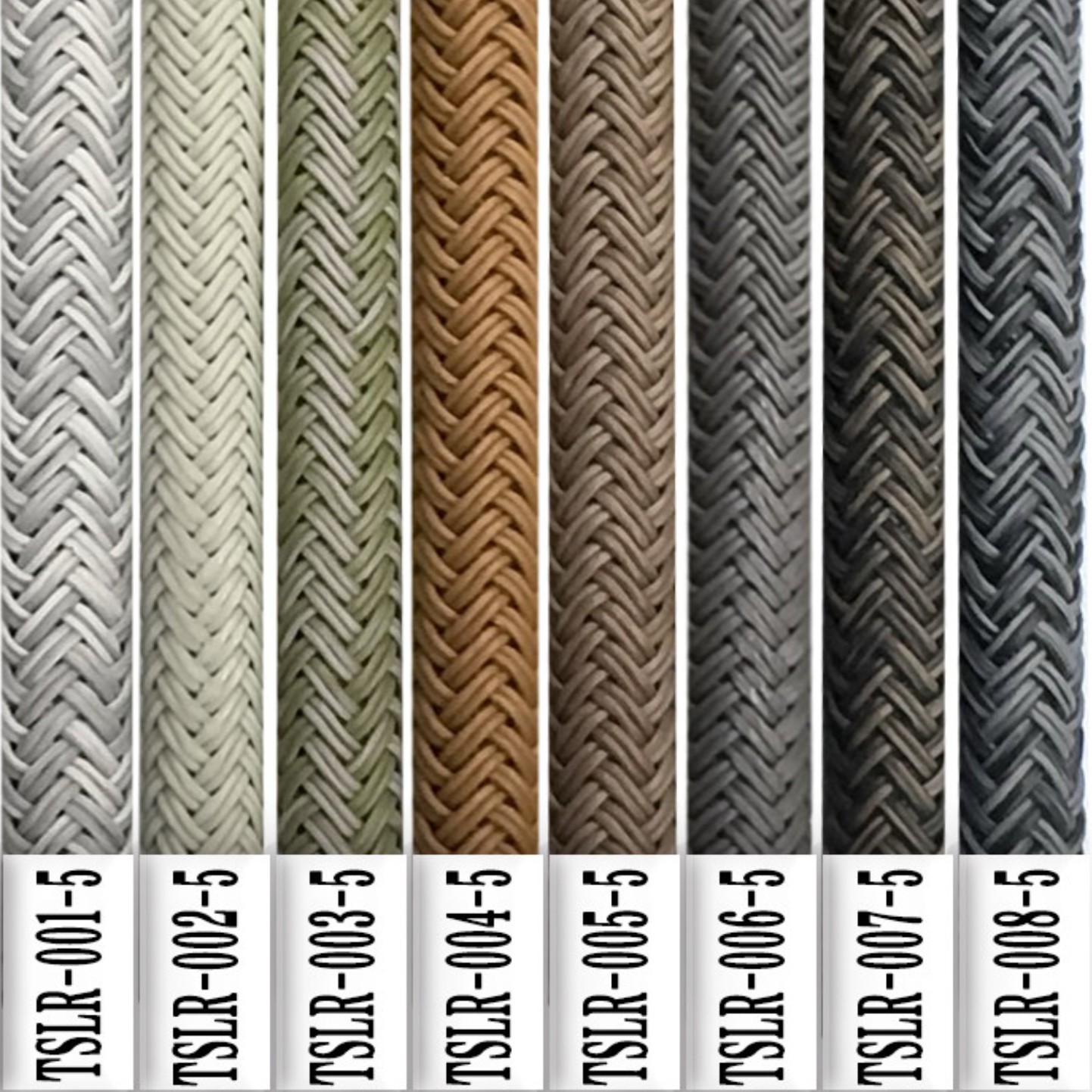
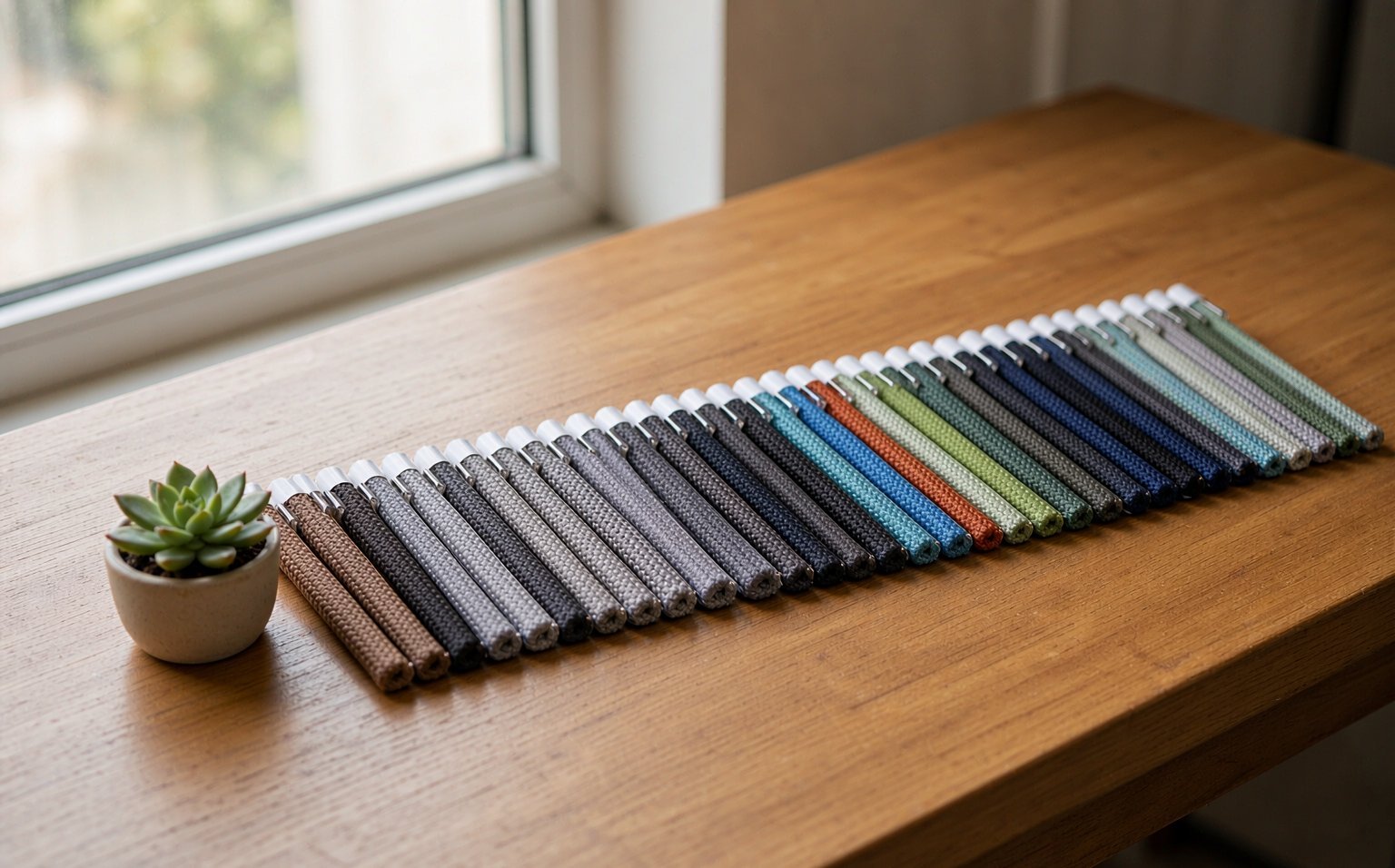
| Colour source | Colour is decided at the masterbatch stage of a solution-dyed yarn, so the palette is chosen from physical sample cards, not screens | Screen-matched colours that drift away from the delivered lot |
On colour: solution-dyed yarn takes its colour from the masterbatch mixed before extrusion, which is why a physical sample card from the actual lot range is the only honest reference. WebbingStyle keeps a standing palette of solution-dyed polyester rope cords that can be specified directly from sample cards, and acrylic and Textilene series follow the same lot discipline for programmes that call for those materials.
Sample-Room Protocol: Keeping the Approved Sample and the Delivered Lot the Same Thing
A specification becomes real in the sample room. The routine below closes the gap between what was approved and what arrives in bulk:
Step 1 - Colour sample
Approve the colour from a physical sample card from the actual dye lot range, under the light conditions the furniture will live in. Screen colour is a reference, not an approval.
Step 2 - Batch sample
Weave a short length at the specified diameter, pitch and tension on the intended frame section. This is where the four parameters stop being numbers and start being a surface.
Step 3 - Install check
Mount the batch sample on a real frame and check rail edges, fixing pitch and corner behaviour. Most rework costs hide in these three interfaces, and all three are cheaper to fix on paper.
Step 4 - Bulk reference
Keep the approved batch sample as the reference against bulk. Colour consistency is lot-based: the same colour comes from the same masterbatch lot, so record the lot with the approved sample.
The protocol works best when the supplier is brought in at the drawing stage, not the quotation stage. Our guide on preparing an OEM/ODM webbing request sets out the information checklist and the three sampling gates that turn a drawn specification into a shippable lot.
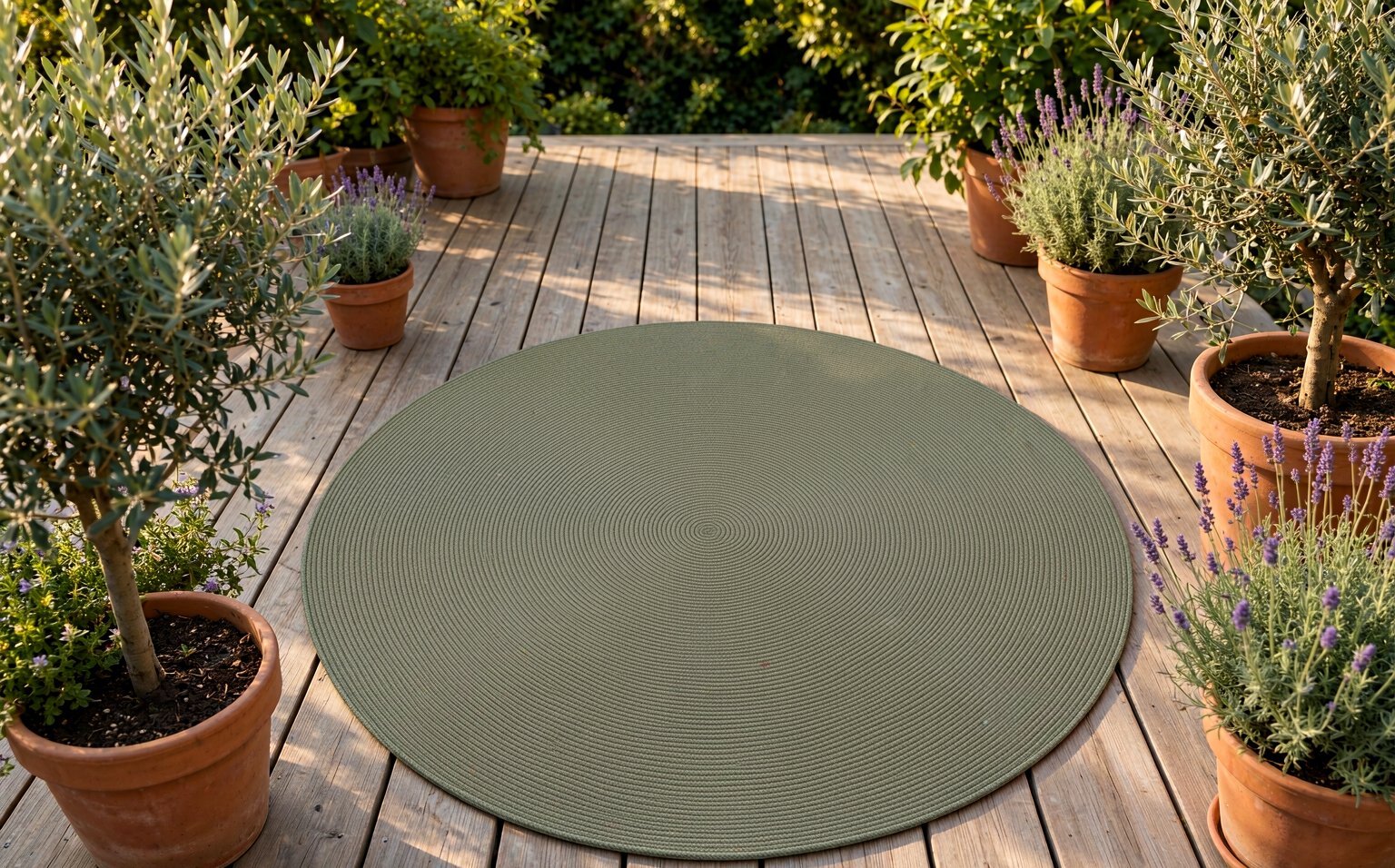
How WebbingStyle Works From the Drawing Side
WebbingStyle manufactures rope webbing with the drawing as the reference document: cord diameter, row pitch and tension are produced to the drawn values, sample reviews flag frame-interface risks before tooling, and the palette is quoted against real masterbatch lots so the colour on the sample card is the colour in the carton. Standard solution-dyed polyester cords cover most outdoor programmes; flat webbing and other yarn families are developed through the OEM/ODM route where the design calls for them.
For designers, the practical starting point is a sample-card set plus a drawing review - both are arranged directly through our sales team.
Where This Guide Stops
The four parameters and four interfaces above are decision points, not standard values: what counts as correct pitch, tension or sag depends on the frame section, the cord construction and the application, and is confirmed through sampling on the actual frame. Test values for abrasion, light fastness and similar properties belong in the supply agreement with the supplier's own data - this guide deliberately leaves them out. What it does commit to is the order of operations: draw the parameters first, sample on the real frame second, and treat the approved batch sample as the contract between design and bulk.
About WebbingStyle
WebbingStyle is a furniture rope webbing manufacturer with over 20 years of industry experience, operating a 12,000 m2 garden-style factory with 70+ production machines and supplying partners in more than 40 countries. The company offers OEM/ODM customisation across acrylic, Textilene, solution-dyed polyester and rubber-plastic core webbing series.
Contact us for samples and a quote
First published: November 2026. Technical guide reviewed annually.


