




Getting Custom Webbing Right: What to Prepare Before Requesting OEM/ODM Rope and Flat Webbing
Searches like custom color furniture webbing manufacturer or OEM ODM rope webbing how to order usually start mid-thought: the buyer already knows customisation exists and wants to know how the process actually runs. The unglamorous truth is that a custom webbing project succeeds or fails before the first sample is woven. The five pieces of information in the checklist below decide whether your OEM or ODM request comes back as a precise quote and a usable sample, or as three weeks of back-and-forth questions.
This guide separates the two routes, lists what to prepare, walks through the three sampling gates, and explains the one process constraint that surprises buyers most: in solution-dyed webbing, colour is decided at the masterbatch stage, not at the loom.
Colour approval for solution-dyed webbing is decided at the masterbatch stage, not at the loom. Once a dye lot is approved, expect the same colour only from the same lot.
OEM vs ODM: What Each Route Asks of You
The two terms are used loosely in the market, and mixing them up leads to mismatched expectations on both sides.
OEM - build to your specification
You already know the product: the colour, the width, the core, the construction. The factory manufactures against your specification. What you prepare is documentation: a physical colour reference, dimensions with tolerances, and the construction details. Your risk is under-specification; if a value is missing, someone will guess it, and guesses at the loom are expensive to correct later.
ODM - build to your outcome
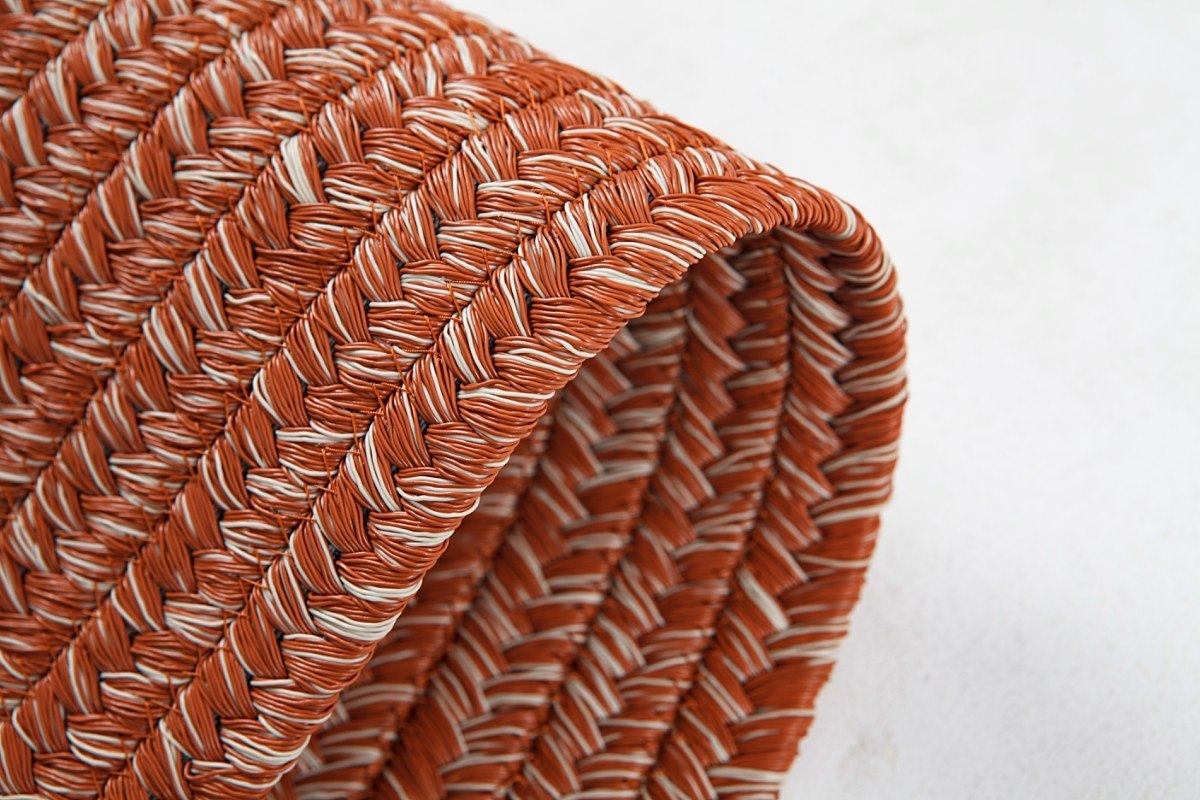
You know the result you want: a surface that keeps its rebound after a season of resort use, a cord that reads right at two metres, a tone that matches a furniture line. The factory proposes the construction and validates it with samples. What you prepare is an honest description of the outcome and the environment, plus the constraints you cannot move, such as frame channel width or a brand colour. Your risk is vagueness; an outcome described only as premium returns a sample that is premium to the weaver and wrong for your project.
The Information Checklist Before You Request a Quote
Buyers asking how to order custom width flat webbing or rope cord usually underestimate how few fields a clean brief needs. Five fields cover most of it:
| Item | Why it matters | What to prepare |
|---|---|---|
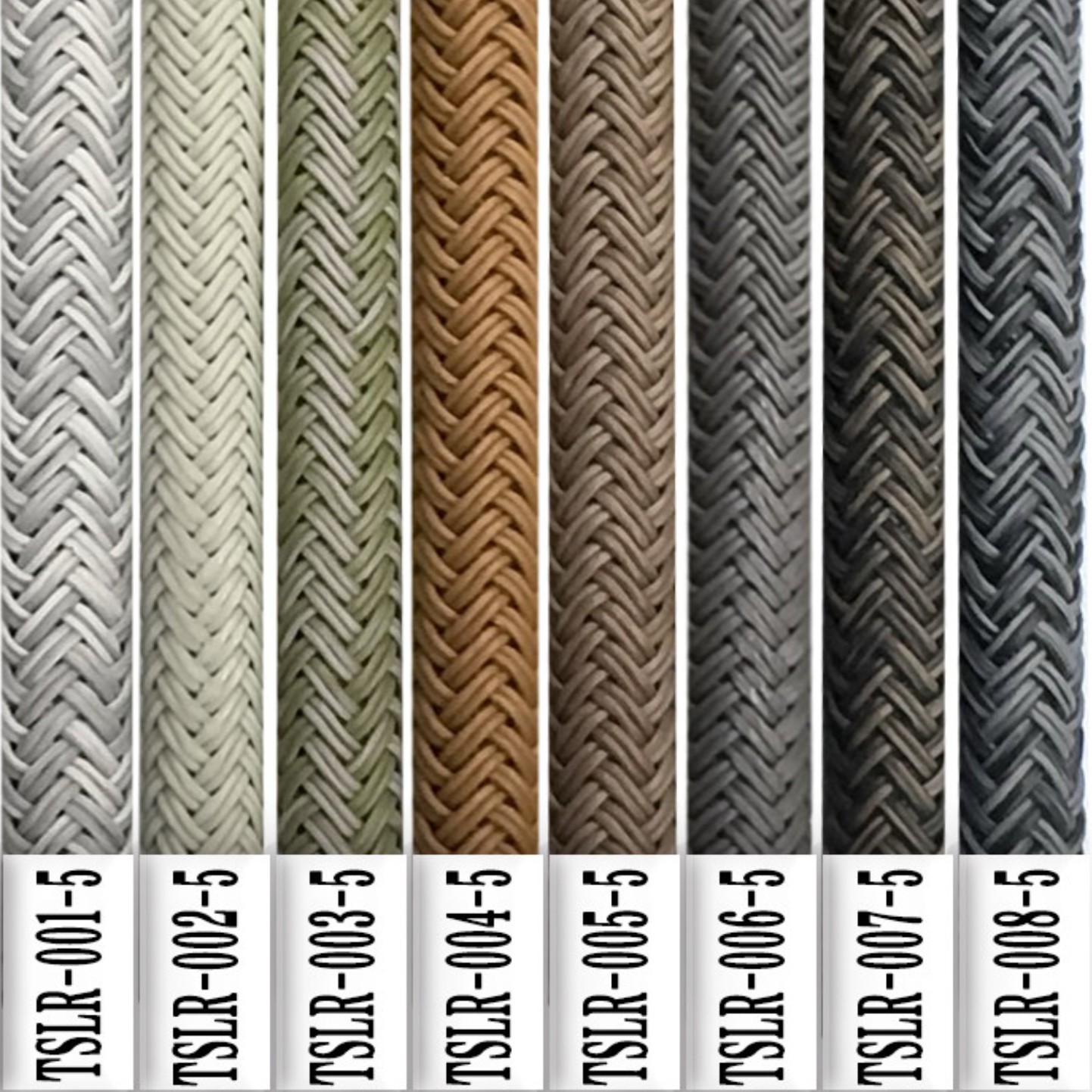
| Colour reference | Colour is set in the masterbatch, so the reference must be physical, not verbal | A mailed fabric swatch, a Pantone textile code, or a sample of the current webbing you want to match |
| Width and thickness | Loom settings, cord diameter and edge finish all follow from these two numbers | Target width in mm, tolerance you can accept, and the thickness the frame channel was designed for |
| Core type | The core decides rebound, hand feel and fatigue behaviour of the finished cord | Rubber-plastic core, spandex-polyester core, or no core, plus the surface feel you expect after months of use |
| Application environment | Open sun, shade, poolside and coastal sites rank UV, mildew and drying differently | Where the furniture will stand, how often it gets wet, and whether it is residential or hospitality |
| Volume band | Sampling depth and pricing structure depend on the order size behind the request | An honest range, for example first trial order and expected annual volume; exact MOQ is confirmed by sales |
Exact minimum order quantities and sampling terms are confirmed case by case by our sales team, because they depend on width, colour programme and construction. What the checklist does is make the first conversation a quoting conversation instead of an interrogation.
Sampling: Three Gates Between Colour Idea and Bulk
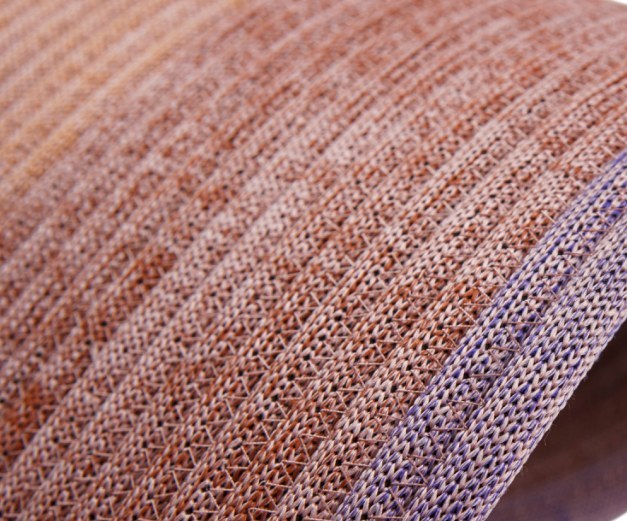
A custom webbing order passes through three approval gates. Collapsing them into one is the most common cause of disputes, because a colour swatch and a production sample answer different questions.
Gate 1 - Colour swatch
A small dyed-cord swatch confirms the masterbatch direction. It answers one question only: is this the colour? It does not predict hand feel, thickness tolerance or how the weave reads at room scale, so treat it as step one, not as an approval for bulk.
Gate 2 - Pre-production sample
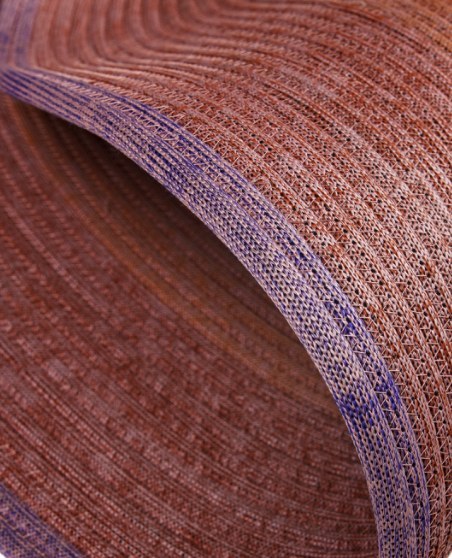
Woven on the production loom with the agreed width, core and pitch, this sample is the real approval gate. Check rebound, edge finish, tone under daylight on your own floor, and how the cord behaves in your frame channel before signing off.
Gate 3 - Bulk consistency
Bulk should match the approved pre-production sample from the same dye lot. Agree in advance that any colour change, however small, is flagged against the lot number, so replacements ordered months later stay in the same tone family.
Why Solution-Dyeing Limits Colour Changes
In piece dyeing, yarn is woven first and coloured later, so a colour change is a small scheduling event. Solution dyeing works the other way round: pigment is blended into the polymer at the masterbatch stage, the filament is extruded in that colour, and only then does weaving happen. The colour is inside the fibre, which is why it holds through seasons of equatorial sun, and it is also why the colour cannot be adjusted at the loom.
The practical consequences for a custom programme: colour development happens at the masterbatch bench, so approve colours from dyed-cord swatches of the actual lot; a change of tone after approval means a new masterbatch, a new dye lot and a new round of sampling; and continuity across orders comes from lot traceability, which is the reason the checklist asks for an honest volume band. Buyers who need the widest immediate colour range can also start from standard stock series such as the solution-dyed polyester rope webbing range, then move to a custom lot once volumes justify it.
What WebbingStyle Needs From You to Quote Fast
From our side of the correspondence, these five items shorten the path from enquiry to sample more than anything else:
- The colour reference itself, mailed rather than photographed, plus a note on where the furniture will be used.
- Width, thickness and core type, even if some values are estimates; a draft narrows the quote far faster than a blank form.
- The volume band you expect for the first order and the year, so sampling effort is sized correctly.
- Your deadline: when samples are needed, and when bulk would ship, so the schedule can be checked against loom capacity.
- Any compliance or test documentation your market requires; requests raised early are easier to satisfy than requests raised at shipment.
If you are still choosing the material itself, our earlier comparison of acrylic, Textilene and solution-dyed polyester for tropical climates covers that decision before customisation begins.
Where This Guide Stops
Timelines, MOQ thresholds, sampling fees and the number of free colour iterations depend on the specific construction and dye-lot work behind each request, and are confirmed by our sales team case by case; the numbers are deliberately not stated here, because a wrong number quoted in a guide is worse than a question asked in an email. What this guide does promise is the shape of the process: five checklist fields, three sampling gates, and a colour that is decided once, at the masterbatch, then protected by lot discipline.
About WebbingStyle
WebbingStyle is a furniture rope webbing manufacturer with over 20 years of industry experience, operating a 12,000 m2 garden-style factory with 70+ production machines and supplying partners in more than 40 countries. The company offers OEM/ODM customisation across acrylic, Textilene, solution-dyed polyester and rubber-plastic core webbing series.
Contact us for samples and a quote
First published: November 2026. Process guide reviewed annually.